
Don’t count on baking soda to kill head lice. It isn’t a lice medicine, and neither the CDC nor the AAP lists it as a way to treat an infestation. The AAP’s advice is to skip home remedies because no studies prove they work. The itch half of the tip needs an honest correction too: no CDC or AAP guidance says baking soda calms a lice itch. That itch is an allergic reaction to louse bites, so its cause is the lice themselves.
This matters for a family because a quieter evening can look like progress while the infestation carries on. The CDC’s overview of head lice notes that adult lice can live on a person’s head for about 30 days, and that an adult female can lay about six eggs each day. Time spent waiting on a pantry powder is time those eggs keep arriving. The more useful step is confirming whether live lice are there, then handling them the way the CDC and AAP describe.
Why a Baking Soda Paste Isn’t a Lice Treatment
A baking soda paste isn’t a lice treatment because health guidance treats kitchen remedies as unproven, and none of it names baking soda as an exception. The CDC says it does not have scientific evidence that suffocating head lice with mayonnaise, olive oil, margarine, butter or similar substances is an effective form of treatment. MedlinePlus, from the National Institutes of Health, is just as plain: there is no clear scientific evidence that lice can be suffocated by home remedies. The AAP tells parents not to use petroleum jelly, mayonnaise, tub margarine, essential oils or olive oil for the same reason.
What the CDC does describe as treatment is medication: pediculicides sold over the counter or by prescription. It adds that each over-the-counter product approved by the FDA for head lice contains one of a set list of active ingredients. Baking soda, also sold as bicarbonate of soda or sodium bicarbonate, is a pantry staple, not one of those medicines.
Rinsing a paste out of the hair doesn’t add much either. The CDC notes that head lice can survive under water for several hours, so a long soak or rinse isn’t a reliable way to drown them. The same point comes up when parents ask whether a hot shower can kill head lice.
If you spotted lice while working a paste through the hair, look at the tool in your other hand. The CDC says to use nit combs to remove nits and lice from the hair shaft, and the AAP describes combing wet hair in small sections with a fine-tooth louse or nit comb. A louse on the comb confirms lice are there; it doesn’t show the powder did anything. Even the comb has limits, since the AAP says the comb-out method “usually doesn’t work on its own to get rid of head lice.”
Yes, Lice Bite, and the Itch Is Your Child’s Reaction
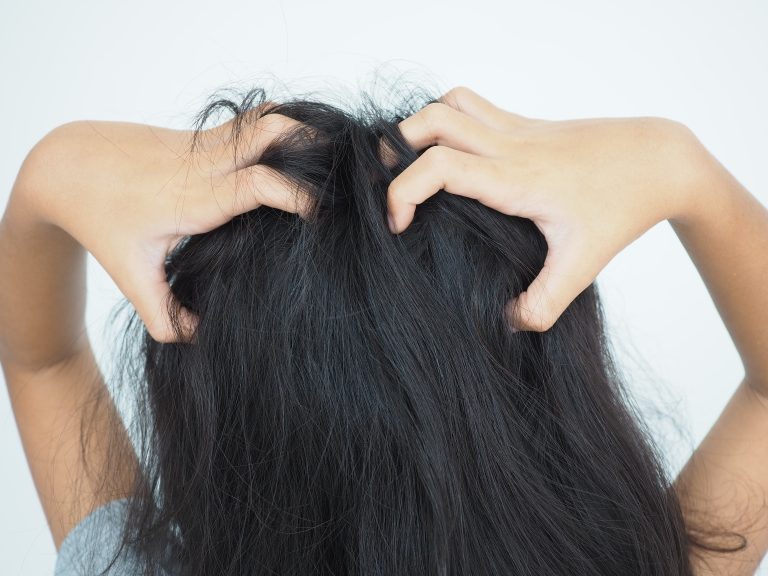
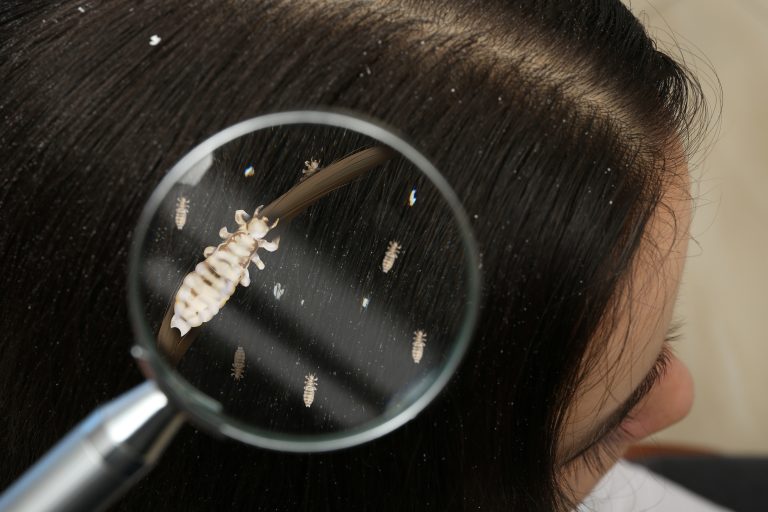
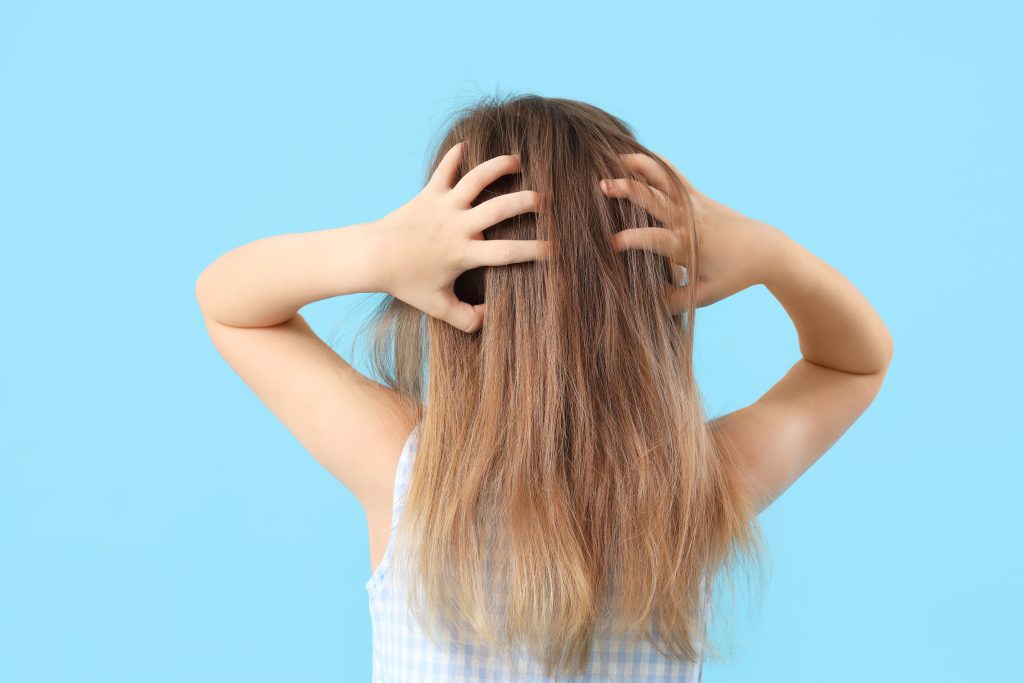
Head lice do bite. The CDC describes them as parasitic insects that feed on human blood, and the AAP says they take small amounts of blood from the scalp. The itch that follows is your child’s body reacting: the CDC calls it an allergic reaction to louse bites, and the AAP explains that the scalp becomes sensitive to the lice saliva.
That sensitivity takes time to build, which is why the first sign can arrive late. The CDC says it may take four to six weeks for itching to appear the first time a person has head lice, and that people with head lice may not have symptoms, particularly with a first infestation or when an infestation is light. A child who isn’t scratching can still be carrying lice, because head lice can live on a child for weeks before the first itch.
Does a lice itch go on all the time? Not necessarily, and not in every spot. Besides itching, the CDC lists a tickling feeling or a sensation of something moving in the hair, irritability and sleeplessness, and sores on the head caused by scratching. MedlinePlus ties the trouble sleeping to head lice being “most active in the dark.” The AAP adds that “most of the itching happens behind the ears or at the back of the neck,” and it names the hairline at the back of the neck and the area behind the ears as the easiest places to find lice.
Will Baking Soda Soothe an Itchy Scalp Anyway?
We can’t tell you it will. No CDC, AAP or MedlinePlus guidance recommends baking soda for a lice itch, and passing along a pantry tip as if it were medical advice wouldn’t be fair to a parent with an uncomfortable child. What those sources do say about the itch is more useful for planning the next few weeks.
First, the itch can outlast the lice. The AAP notes that itching caused by head lice can last for weeks, even after the lice are gone. Second, treatment itself can sting, since the CDC says some lice medications may cause itching or a mild burning sensation. Third, scratching carries its own risk: the CDC warns that sores from scratching can sometimes become infected with bacteria normally found on the skin. If a child has broken skin, or the itch keeps going after treatment, the child’s doctor is the right person to ask about relief. We cover why a head can keep itching after lice treatment in more detail elsewhere.
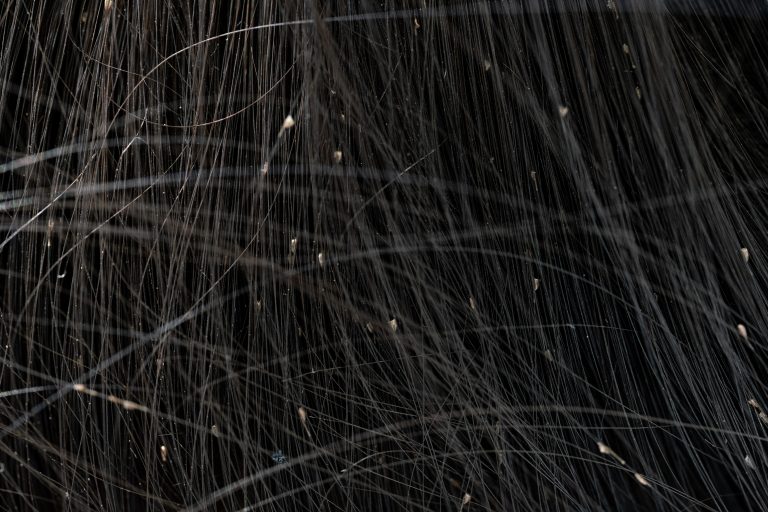
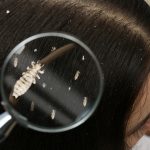
Some searches for baking soda and an itchy scalp come from parents who aren’t sure lice are involved at all, and that question is worth settling first. The CDC states that “misdiagnosis of head lice infestation is common” and that nits get confused with dandruff, hair spray droplets and dirt. The AAP gives the test: nits are firmly attached to hair, while dandruff, dirt and other particles are not. The CDC adds that finding a live nymph or adult louse on the scalp or hair is the best way to diagnose head lice, and that if you’re not sure, you should see your healthcare provider.
Does Baking Soda Kill Lice in Carpet?
You don’t need baking soda on the carpet, because the CDC sees little risk in floors. It says head lice mainly spread by direct contact with the hair of a person who has lice, and that the risk of getting lice from a louse that has fallen onto a rug, carpet or furniture is very small. A louse that falls off a person and can’t feed will die within two days, according to the CDC; the AAP says lice can’t survive more than one day without a blood meal.
For the floor, the CDC’s suggestion is ordinary: vacuum the floor and furniture, particularly where the person with lice sat or lay. For laundry, it says to machine wash and dry clothing, towels, bed linens and other items that person wore or used during the two days before treatment, using the hot water (130 degrees Fahrenheit) laundry cycle and the high heat drying cycle. Items you can’t wash or dry clean can be sealed in a plastic bag and stored for two weeks.
What the CDC and AAP warn against is going bigger. The CDC says not to use fumigant sprays or fogs, because they are not necessary to control head lice and can be toxic if inhaled or absorbed through the skin, and the AAP says not to spray pesticides in your home. The CDC also says spending much time and money on housecleaning is not necessary to avoid reinfestation, which is why stripping every bed won’t end a lice problem on its own.
What About Baking Soda and Vinegar Together?
Mixing baking soda with vinegar doesn’t create a lice treatment. Neither ingredient appears among the medicines the CDC and AAP describe, and pairing two unproven remedies doesn’t add up to a proven one. The same caution covers lemon juice and other pantry tips that promise results in a day, because the AAP’s warning against home remedies rests on the lack of studies showing they work.
The nits are a separate problem from the crawling lice. The AAP says lice attach their eggs to hair close to the scalp, and that nits attach with a sticky substance that holds them firmly in place. The CDC puts hatching at about a week, with a range of 6 to 9 days, while the AAP gives 7 to 12 days depending on the surrounding temperature. A rinse that leaves those eggs on the hair leaves the next round of lice there too, which is the point behind our post on how a vinegar rinse leaves the nits right where they are.
Some home approaches carry real risk, not just lost time. The AAP says never to use dangerous products like gasoline or kerosene or medicines made for use on animals, never to place a plastic bag on a child’s head, and not to leave a child alone with medicine in their hair. The CDC adds that lice drugs are insecticides and can be dangerous if misused or overused, and it says not to use extra amounts or two different lice drugs at the same time unless your healthcare provider or pharmacist tells you to.
What the CDC and AAP Recommend Instead
The CDC and AAP point parents toward confirming live lice, checking with the child’s doctor, and using a lice medicine exactly as its label directs. The AAP calls head lice medicine “the most effective way to treat head lice” and says it should be used only when it is certain your child has living head lice. The CDC says both over-the-counter and prescription medications treat head lice, and that medications are generally safe and effective when used correctly. If an over-the-counter product doesn’t work, MedlinePlus says you can ask your health care provider for a prescription product.
| What you’re facing | What the CDC or AAP says |
|---|---|
| You found live lice | Check with your child’s doctor before beginning any treatment (AAP). Use the lice medicine as directed on the box or label (CDC). |
| A few lice still moving slowly 8 to 12 hours after medicine | You do not need to reapply the medicine (CDC). |
| Live, crawling lice several days after treatment | Treat again only if there are live lice several days after treatment, and talk to a healthcare provider before re-treating (CDC). |
| Nits still in the hair | Nits may stay in hair after treatment, but successful treatment will kill crawling lice (CDC). |
| Other people at home | Check all household members and other close contacts for head lice (CDC). |
Checking doesn’t stop after one round. The CDC says to check hair and remove nits and lice every 2 to 3 days for the next 2 to 3 weeks after each treatment, and the AAP describes the same comb-out rhythm as a way to help remove nits and eggs. The CDC also says to treat all infested household members and close contacts at the same time. Everyone gets checked, but one child’s lice doesn’t mean treating the whole family unless others have lice too. If treatments you’ve tried haven’t gotten rid of the lice, the AAP says to ask your child’s doctor.
Frequently Asked Questions
Can baking soda kill lice?
It isn’t a dependable way to kill lice, so we don’t suggest relying on it. Baking soda is a kitchen ingredient rather than a pediculicide, the term the CDC uses for lice medicines. The AAP’s position on home remedies is that no studies show they work, and the CDC finds no scientific evidence for smothering lice with greasy pantry items. A lice medicine used as labeled, after talking with your child’s doctor, is what both groups describe.
Is bicarbonate of soda any different from baking soda for lice?
No, bicarbonate of soda, sodium bicarbonate and baking soda are names for the same pantry powder, and the answer doesn’t change with the label. Whatever language the tip came in, the CDC and AAP don’t treat it as a lice medicine. If you found the advice in a translated article or a family message thread, the better next step is a careful look at the scalp and a call to your child’s doctor.
Do head lice bite?
Yes, they bite in order to feed. MedlinePlus describes head lice as parasites that need to feed on human blood to survive, and they take that blood from the scalp. The bites don’t make anyone seriously ill; the AAP says lice don’t cause serious illness or carry any diseases. What makes the bites noticeable is the allergic reaction that can build over the weeks after lice arrive.
Does lice itch all the time?
Not necessarily, and some people with lice feel nothing at first. A first or light infestation may cause no symptoms, according to the CDC. Once the reaction develops, the AAP points to the back of the neck and the area behind the ears as the itchiest spots. Nighttime can be harder, since MedlinePlus connects trouble sleeping with lice activity after dark.
Does baking soda help an itchy scalp?
We can’t point to any CDC, AAP or MedlinePlus guidance that says it does. If lice are behind the itch, the cause is an allergic reaction to their bites, so the lice themselves are what need attention, and some itching may linger for a while afterward. For a scalp that stays itchy, raw or sore, ask your child’s doctor what to use rather than experimenting with pantry ingredients.
Does baking soda and vinegar kill lice?
Neither the CDC nor the AAP supports the combination as a lice treatment, and neither lists either ingredient on its own. The CDC names nit combs for taking nits and lice off the hair shaft, alongside lice medicine used as labeled. If a fizzy rinse has left your child still scratching days later, a careful head check will tell you whether live lice remain.
How Lice Lifters of Mercer County Can Help
If baking soda, vinegar or any other pantry tip has left you unsure where things stand, our clinic can give you a clear answer. Lice Lifters of Mercer County checks the whole family, not only the child who is scratching, so you know who has lice and who doesn’t. When treatment is needed, our professional lice treatment is non-toxic and done in one visit, and we offer same-day appointments. Our 30 Day Guarantee applies when the whole family is checked. If you’d like a calm, careful look at what’s going on, book a head check with our team and leave the guesswork behind.